Building Strength con Educacion, Respeto y Confizana - Ana Celia Zentella
"..the complexity of the relationship among language, culture, and education, and unsure bout how to proceed."
Frustrating communication with Latino parents. No cultural understanding.
"la maestra es tu segunda mama (the teacher is your second mother), expecting teachers to sustain and expand the values of the home).
"Another aspect of our anthropological ope sis that the language of authority of the school may be used to disrupt the collaboration of teachers, parents, and children in their own silencing by recognizing bilingualism and multi-dialectism as assets instead of liabilities, and by becoming multilingual in vision and practice.
Dual vision classrooms - multilingual culture - international perspective. = better educational outcomes, social economic and political outcomes
Thursday, May 31, 2018

Precious Knowledge
Approximately 50% of Hispanics drop out of school. Inadequate education for Latino children. No diploma = exploitation.
"They are using 2nd grade children of color data to determine what number of prisons they are going to need in the future."
Students are actually motivated to learn and feel a connection to their work. This makes them feel empowered. They want to come to school.
"Is the community part of the school? Or is the school part of the community?"
Students are sharing information with parents and are enjoying the learning process.
On the opposing side.. we have the Super Intendant of the school district who attempts to shut down the ethnic studies programs.
The teacher is encouraging students to disengage with anyone arguing. It is clear that the class is more than just an ethnic studies program. They are not targeting specific group but rather getting to the route of social justice issues.
"To answer your question, it doesn't teach us to be anti-american. It teaches us to embrace america, all of it's flaws and all. But certain things like racism and certain things like oppression, they do exist." "...they figured out who they really are as human beings, they figure out how to handle situations to their best abilities, so they word anti-american's isn't even relevant in our classes."
-Mariah Harvey
"They are using 2nd grade children of color data to determine what number of prisons they are going to need in the future."
Students are actually motivated to learn and feel a connection to their work. This makes them feel empowered. They want to come to school.
"Is the community part of the school? Or is the school part of the community?"
Students are sharing information with parents and are enjoying the learning process.
On the opposing side.. we have the Super Intendant of the school district who attempts to shut down the ethnic studies programs.
The teacher is encouraging students to disengage with anyone arguing. It is clear that the class is more than just an ethnic studies program. They are not targeting specific group but rather getting to the route of social justice issues.
"To answer your question, it doesn't teach us to be anti-american. It teaches us to embrace america, all of it's flaws and all. But certain things like racism and certain things like oppression, they do exist." "...they figured out who they really are as human beings, they figure out how to handle situations to their best abilities, so they word anti-american's isn't even relevant in our classes."
-Mariah Harvey
Latino Youth
A Critically Compassionate Pedagogy for Latino Youth - Julio Cammarota and Augustine Romero
"Authentic caring promotes student-teacher relationships characterized by respect, admiration, and love, which in turn, inspire young Latinos and Latinos to better themselves and their communities. It also encompasses a social justice curriculum that dispels ideological notions of racial inferiority, while cultivating the intellectual capacities of poop and working class Latino students"
I feel that this is true for all students. When teachers build authentic relationships with students, it can make a world of a difference. Students may be more inclined to complete work, show up for class and ask for help or advice. When a student feels comfortable trusting a teacher, it can in turn lead to more student success. The hope for young Latinos in school was to promote them to be active citizens, critical consciousness, and more importantly increase their commitment towards transforming educational practices and improve lives for other Latino youth.
The study also talks about Critically compassionate intellectualism: create engaging critical dialogue and opinions. Making sure students have a voice and are entitled to their own opinion is something that can make a huge difference. For them to know that they are not wrong for thinking in a different way can encourage them to make a difference.
"Unfortunately, the teaching styles of many teachers seem to fall under the category of aesthetic caring, where concerns for the technical (i.e. skill level) are central". "..often shaped primarily by high-stakes testing and the dictates of such national policies as No Child Left Behind (NCLB), aesthetic caring is becoming more pervasive in US schools."

We mentioned this topic multiple times throughout the course of of class. We spoke about how teachers may be labeled as under-performing because the students in their class did not meet test score expectations. This in turn leads to schools being shut down and teachers losing their jobs. It also means that teachers are teaching to the test standards, leaving no time for creativity and fostering free opinionated learning environments. School is becoming more about testing and academics than preparing students to become ready for the real world and contribute to society in a meaningful way.
No Child Left Behind - Although I realize President Bush's intentions were good, the statistics in the video demonstrate how the testing has not improved scores and when looking at 8th grade proficiency in math and reading, some states scored as low as 14%.
Career Aptitude Test - Funny how what you score on a test could mean nothing in the future...
The author also mentions how racism could get in the way of forming authentic, meaningful relationships and inhibit self-determination in Latino students. "Teachers cannot become authentic caregivers unless they merge their caring with a counter-hegemonic praxis that both dispels notions of racial inferiority and recognizes the wealth of knowledge that each and every student brings to the classroom." I feel that what I enjoy most about teaching is listening to other people's points of views. I know everybody has a different style of learning and not everybody thinks in the same way. As students grow older, the begin to develop into these amazing, powerful, informed humans. It is our responsibility to get them there. When we stop them from free thinking, or put a racial bias on them to tell them that they are inferior, we hinder their growth as learners and devalue them as valuable people in our society.
"Authentic caring promotes student-teacher relationships characterized by respect, admiration, and love, which in turn, inspire young Latinos and Latinos to better themselves and their communities. It also encompasses a social justice curriculum that dispels ideological notions of racial inferiority, while cultivating the intellectual capacities of poop and working class Latino students"
I feel that this is true for all students. When teachers build authentic relationships with students, it can make a world of a difference. Students may be more inclined to complete work, show up for class and ask for help or advice. When a student feels comfortable trusting a teacher, it can in turn lead to more student success. The hope for young Latinos in school was to promote them to be active citizens, critical consciousness, and more importantly increase their commitment towards transforming educational practices and improve lives for other Latino youth.
The study also talks about Critically compassionate intellectualism: create engaging critical dialogue and opinions. Making sure students have a voice and are entitled to their own opinion is something that can make a huge difference. For them to know that they are not wrong for thinking in a different way can encourage them to make a difference.
"Unfortunately, the teaching styles of many teachers seem to fall under the category of aesthetic caring, where concerns for the technical (i.e. skill level) are central". "..often shaped primarily by high-stakes testing and the dictates of such national policies as No Child Left Behind (NCLB), aesthetic caring is becoming more pervasive in US schools."
We mentioned this topic multiple times throughout the course of of class. We spoke about how teachers may be labeled as under-performing because the students in their class did not meet test score expectations. This in turn leads to schools being shut down and teachers losing their jobs. It also means that teachers are teaching to the test standards, leaving no time for creativity and fostering free opinionated learning environments. School is becoming more about testing and academics than preparing students to become ready for the real world and contribute to society in a meaningful way.
No Child Left Behind - Although I realize President Bush's intentions were good, the statistics in the video demonstrate how the testing has not improved scores and when looking at 8th grade proficiency in math and reading, some states scored as low as 14%.
Career Aptitude Test - Funny how what you score on a test could mean nothing in the future...
The author also mentions how racism could get in the way of forming authentic, meaningful relationships and inhibit self-determination in Latino students. "Teachers cannot become authentic caregivers unless they merge their caring with a counter-hegemonic praxis that both dispels notions of racial inferiority and recognizes the wealth of knowledge that each and every student brings to the classroom." I feel that what I enjoy most about teaching is listening to other people's points of views. I know everybody has a different style of learning and not everybody thinks in the same way. As students grow older, the begin to develop into these amazing, powerful, informed humans. It is our responsibility to get them there. When we stop them from free thinking, or put a racial bias on them to tell them that they are inferior, we hinder their growth as learners and devalue them as valuable people in our society.
Deculturalization
Deculturalization and the Claim of Racial and Cultural
Superiority by Anglo-Americans.

The word “deculturalization” is so horrific its almost humorous. Many refer to America as this “melting pot”
of society. However, we forget to remember
that racism still exists today and the multiple tragedies our people have committed
against one another. “Cultural
genocide – the attempt to destroy other cultures – as an important part of the
history of violence in the U.S. Often, U.S educational policies have involved
cultural genocide. ‘Deculturalization’
is the term I use for the process of cultural genocide. Deculturalization is
the educational process of destroying people’s culture and replacing it with a new
culture.”. Our government made it very
apparent how they wanted every non-Anglo-American culture to assimilate to their
own culture, which they considered to be superior. Even the United States schools focused on a curriculum
surrounded Anglo-American culture. They wanted
students to speak their language. Language
is a big part of culture, I feel that stripping them of this was demoralizing
to them as human beings.
In the section where the author talks about the Culture and
Race as Central Issues in US history and Education, it lists some of the more
unfortunate parts of American History.
Including almost 1 million deaths from the civil war, the Trail of
Death, the lynching and killing of Chinese and African people, race riots, and
segregation in general. This is so horrible
and awful to think that all of this was caused because one race felt that they
were more superior that the other.
“..The Naturalization Act of 1790 highlight the racial and
cultural attitudes of early government leaders.
The Naturalization Act excluded from citizenship all nonwhites,
including Indians. Indians were
considered domestic foreigners and, therefore, ineligible for citizenship.” This relates to the other article talking
about how uncultured English settlers considered Native American’s to be. It is funny to think of America as this “melting
pot” of society, when in reality, our government tried to assimilate all non-typical
Anglo-American culture’s EVEN THE ONE’S WHO WERE HERE BEFORE THEM. Boy .. how society is crazy. What gives groups of people the right to think
their culture is better than anyone else? What makes the so much more superior?
Lastly, I thought that it was ironic how our government at
the time thought that Native American’s were savages and yet they relied on
them for their land and the increase of goods and services. “Jefferson wanted to change Native American
values regarding the economy, government, family relations, and property, and
manipulate desires regarding consumption of goods. Civilizing Native Americans, in this case,
meant completely wedding them to an economy of increasing production and
demanding new goods.” These intentions
are so backwards and selfish. The
government was looking to better themselves with disregard to culture in
general. They hoped to gain their land,
strip them of their culture and make them dependent on American government and
economy.
It is good to see how far we have come but a shame that
there is still so much racism and bigotry in our country today. We see how affected the lives of these people
were yet, our current government feels the need to instill their believes among
not only the United States but believes that our culture is better than the
rest of the world as a whole.
Tuesday, May 29, 2018
The Indian Boarding Schools
The Indian Boarding School: Michelle Bollinger
After reading about Indian Boarding School I was shocked at the amount of ignorance and the demoralizing way Native America's were treated. It is a shame to think that those who were in this country before anyone else were treated like savages instead of human beings. "A great general has said that the only good Indian is a dead one, and that the high sanction of his destruction has been an enormous favor in promoting Indian massacres. In sense, I agree with the sentiment, but only in this: that all the Indian there is in the race should be dead. Kill the Indian in him, and save the man." This demonstrates how the culture of Native Americans is completely disregarded. These are people who helped grow the country into what it was and they were being shunned for looking differently and having different values.
When looking into the boarding schools that they had, they came across as awful, horrible, places to send any child. "The goal of these schools was to aggressively strip Indian youth of their cultural traditions, languages, and religious beliefs. The approach to education was not grounded in an understanding of child development or academic instruction - but rather racism, Christianity and military discipline." This was probably the most alarming part of the article that I read. I felt that they were actually brainwashing Native American children into thinking how horrible they were and that their culture was morally wrong. Being an educator now, I realize how impressionable my students are. They spend the majority of their time in school and look up to teachers as role models. If a figure of authority told them that something they were doing was wrong, they would most likely believe it. Culturally responsive teaching is such a huge part of our teaching environment now a days that it is crazy to think children were being influenced in this way in American schools.
Below is a before an after picture of a Native American student after he was stripped of his culture.

There were MANY instances just like this one where these children were forced into white culture.
Kill the Indian, Save the Man this video speaks in depth about Indian Boarding Schools and how poorly the students were forced to attend boarding schools and be assimilated into white culture. They were even unable to speak their own language - the harsh treatment is baffling.
"Renowned American Indian Movement activist Leonard Peiter, who has been wrongfully incarcerated since 1977, once referred to is years at Wahpeton Indian School in North Dakota as his 'first imprisonment'." I am not surprised by this quote after reading the article. Trying to put myself in the shoes of a student in one of these boarding schools is very difficult. There had been instances of Native American women being impregnated by the priests who ran the schools. Sexual, emotional and physical trauma was ongoing throughout the country at Indian Boarding Schools. Fortunately, I have never had to live a life like this one. I feel horrible for the way that the Native American communities were treated, solely because they were different.
After reading about Indian Boarding School I was shocked at the amount of ignorance and the demoralizing way Native America's were treated. It is a shame to think that those who were in this country before anyone else were treated like savages instead of human beings. "A great general has said that the only good Indian is a dead one, and that the high sanction of his destruction has been an enormous favor in promoting Indian massacres. In sense, I agree with the sentiment, but only in this: that all the Indian there is in the race should be dead. Kill the Indian in him, and save the man." This demonstrates how the culture of Native Americans is completely disregarded. These are people who helped grow the country into what it was and they were being shunned for looking differently and having different values.
When looking into the boarding schools that they had, they came across as awful, horrible, places to send any child. "The goal of these schools was to aggressively strip Indian youth of their cultural traditions, languages, and religious beliefs. The approach to education was not grounded in an understanding of child development or academic instruction - but rather racism, Christianity and military discipline." This was probably the most alarming part of the article that I read. I felt that they were actually brainwashing Native American children into thinking how horrible they were and that their culture was morally wrong. Being an educator now, I realize how impressionable my students are. They spend the majority of their time in school and look up to teachers as role models. If a figure of authority told them that something they were doing was wrong, they would most likely believe it. Culturally responsive teaching is such a huge part of our teaching environment now a days that it is crazy to think children were being influenced in this way in American schools.
Below is a before an after picture of a Native American student after he was stripped of his culture.

There were MANY instances just like this one where these children were forced into white culture.
Kill the Indian, Save the Man this video speaks in depth about Indian Boarding Schools and how poorly the students were forced to attend boarding schools and be assimilated into white culture. They were even unable to speak their own language - the harsh treatment is baffling.
"Renowned American Indian Movement activist Leonard Peiter, who has been wrongfully incarcerated since 1977, once referred to is years at Wahpeton Indian School in North Dakota as his 'first imprisonment'." I am not surprised by this quote after reading the article. Trying to put myself in the shoes of a student in one of these boarding schools is very difficult. There had been instances of Native American women being impregnated by the priests who ran the schools. Sexual, emotional and physical trauma was ongoing throughout the country at Indian Boarding Schools. Fortunately, I have never had to live a life like this one. I feel horrible for the way that the Native American communities were treated, solely because they were different.
Thursday, May 24, 2018
Educational Policy
*PLEASE EXCUSE FORMATTING ISSUES*
"What Counts As Educational Policy?" - Jean Anyon
"As education policymakers and practitioners, we can acknowledge and act on the power of urban poverty, low-wage work, and housing segregation to dwarf most curricular, pedagogical, and other educational reforms" Is policy in education in place for the right reasons? Anyon tries to explain the barriers to educational policy. Policy is put in place to "help" however often times in school, things turn south. Specifically: teaching to the test. In theory it is supposed to help students and schools make gains. In turn, we end up teaching to the test to improve scores and education ends up getting worse. Anyon suggest confrontation educational poverty head on by tackling poverty. Poverty appears to be the root of all evil. Poverty effects cognitive development, access to transportation and the development of communities as a whole. I think that she raises a good point. Personally I believe we can attack it locally but many of the problems that can be address across the United States stem from the federal and state levels.
Anyon, J. (2005). What "Counts" as Educational Policy? Notes toward a New Paradigm. Harvard Educational Review,75(1), 65-88.
Ferner, M. (2016, September 13). The Full Cost Of Incarceration In The U.S. Is Over $1 Trillion, Study Finds. Retrieved from https://www.huffingtonpost.com/entry/mass-incarceration-cost_us_57d82d99e4b09d7a687fde21
"What Counts As Educational Policy?" - Jean Anyon
"As education policymakers and practitioners, we can acknowledge and act on the power of urban poverty, low-wage work, and housing segregation to dwarf most curricular, pedagogical, and other educational reforms" Is policy in education in place for the right reasons? Anyon tries to explain the barriers to educational policy. Policy is put in place to "help" however often times in school, things turn south. Specifically: teaching to the test. In theory it is supposed to help students and schools make gains. In turn, we end up teaching to the test to improve scores and education ends up getting worse. Anyon suggest confrontation educational poverty head on by tackling poverty. Poverty appears to be the root of all evil. Poverty effects cognitive development, access to transportation and the development of communities as a whole. I think that she raises a good point. Personally I believe we can attack it locally but many of the problems that can be address across the United States stem from the federal and state levels.
Anyon, J. (2005). What "Counts" as Educational Policy? Notes toward a New Paradigm. Harvard Educational Review,75(1), 65-88.
"The Full Cost Of Incarceration In The U.S." -Matt Ferner
We need to provide a welcoming community for students to make sure that we break a stigma of any sort of a racist society. When people leave the prison system they are more likely to create more crimes. They face discrimination when applying to jobs. They have a difficult time earning a job and having a successful life post-prison. Seeing an adult or role model in prison, the child may be more likely to go to prison. The forego a lot of educational opportunities because often times they need to fill the economic gap. Family systems are disrupted. Affects the lives of children when it comes to education. "Operating all those federal and state prisons, plus running local jails, is generally said to cost the U.S. government about $80 billion a year." To think about the amount of money that goes into running facilitates for people who have committed crimes is quiet alarming. Personally, I feel that since we are spending such a great amount of US dollars on incarceration, putting some program or using funding to conduct research as to stopping crimes as a whole would be more helpful long term. The article states that the children of incarcerated people are five times more likely to go to prison than their peers. In turn, the had long-term emotional and behavior challenges. I have seen this within my own school district. The cost of incarceration is much more than a dollar amount. It effects the lives of the families of friends and communities. Looking for a solution to make a difference would be a better investment than using government funding to keep up facilities.Ferner, M. (2016, September 13). The Full Cost Of Incarceration In The U.S. Is Over $1 Trillion, Study Finds. Retrieved from https://www.huffingtonpost.com/entry/mass-incarceration-cost_us_57d82d99e4b09d7a687fde21
Tuesday, May 22, 2018
Unnatural Causes: In Sickness and in Wealth
In Sickness and in Wealth was an eye-opening video. It pointed out how illness can often be derived from socio-economic class, specifically surrounding stress levels of individuals. When an individual is constantly stressed for weeks, months, and even years, it causes for increased heart diseases, heart attacks, accelerating aging and ultimately death.
/cdn.vox-cdn.com/uploads/chorus_image/image/49493993/this-is-fine.0.jpg)
Psychologist, Sheldon Cohen wanted to examine the way stress effects our immune system. He stated that "It turns out the more education you have, the less cortisol you release during the day. The more income you have, the less cortisol you release during the day". Cortisol is in fact good for your body in small doses. Long term effects can have detrimental effects. Research indicated that individuals with less chronic stress caught less colds then people with more chronic stress. Those individuals with successful careers have a co-workers to help facilitate job tasks, which cause for less stress as well. Individuals with less stress live healthier lifestyles. These are people are ones who typically have a higher education and have more financial security.
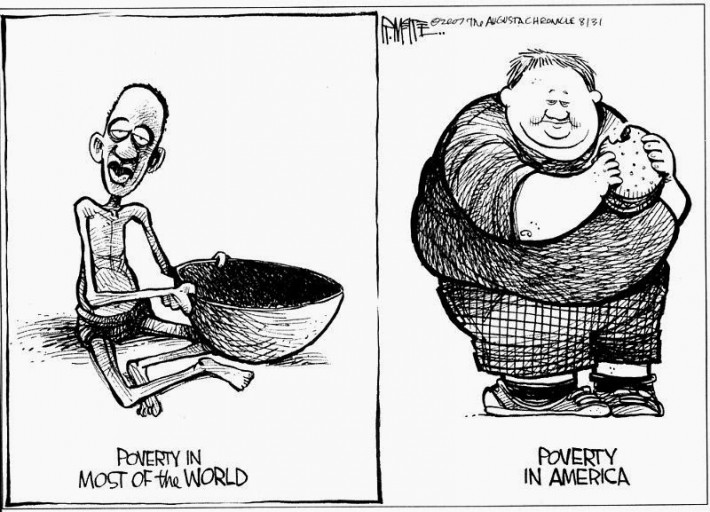
Think about making healthy choice when it comes to eating a meal and exercising: think about the time it takes to prepare the meal, the transportation necessary to get to the store, think about the money we need to afford it, the cost of a gym membership. When you have a higher income, you have a greater opportunity to make healthy life-style choices.
When it comes to growing up, Childhood poverty can have life long health consequences. According the Pediatrician, John P Schonkoff, at Harvard Medical Center "just the burden of day after day not knowing whether there is going to be food on the table or not knowing whether you're going to have a roof over your head, is actually toxic to the brain and the reason for that is because when the stress hormone levels go up, and if it stays up for days and weeks on end, those hormone levels literally interfere with the development of the brain circuity, they interfere with the development of the connections in the brain. So we begin to see in children who experience toxic stress, long term impacts of whats basically chemically damaging to their brain". This demonstrates how socio-economic levels have long term effects on the mental health and physicality of the human body. Unfortunately when it comes to children, they do not have much control over there circumstances. It appears that this is an ongoing problem across our nation in impoverished communities.
"Part of good public health, is empowering communities". - Dr. Adewale Troutman: Director of Louisville Public health and wellness. Other researchers mention creating a a just society as a whole, which goes back to our first class, where we talked about social issues and how they involve communities and large groups of people. It appears that problems effect large groups of people but we as a community can take steps on a united front to begin to address and solve them.
Check out Ted Talks: Mental health & Poverty and more information about obesity in the United States Waist Size and Socioeconomic Status.
Adelman, L. (Director). (2008). In Sickness and in Wealth [Video file]. California Newsreel. Retrieved May 21, 2018, from Kanopy.
Psychologist, Sheldon Cohen wanted to examine the way stress effects our immune system. He stated that "It turns out the more education you have, the less cortisol you release during the day. The more income you have, the less cortisol you release during the day". Cortisol is in fact good for your body in small doses. Long term effects can have detrimental effects. Research indicated that individuals with less chronic stress caught less colds then people with more chronic stress. Those individuals with successful careers have a co-workers to help facilitate job tasks, which cause for less stress as well. Individuals with less stress live healthier lifestyles. These are people are ones who typically have a higher education and have more financial security.
Think about making healthy choice when it comes to eating a meal and exercising: think about the time it takes to prepare the meal, the transportation necessary to get to the store, think about the money we need to afford it, the cost of a gym membership. When you have a higher income, you have a greater opportunity to make healthy life-style choices.
When it comes to growing up, Childhood poverty can have life long health consequences. According the Pediatrician, John P Schonkoff, at Harvard Medical Center "just the burden of day after day not knowing whether there is going to be food on the table or not knowing whether you're going to have a roof over your head, is actually toxic to the brain and the reason for that is because when the stress hormone levels go up, and if it stays up for days and weeks on end, those hormone levels literally interfere with the development of the brain circuity, they interfere with the development of the connections in the brain. So we begin to see in children who experience toxic stress, long term impacts of whats basically chemically damaging to their brain". This demonstrates how socio-economic levels have long term effects on the mental health and physicality of the human body. Unfortunately when it comes to children, they do not have much control over there circumstances. It appears that this is an ongoing problem across our nation in impoverished communities.
"Part of good public health, is empowering communities". - Dr. Adewale Troutman: Director of Louisville Public health and wellness. Other researchers mention creating a a just society as a whole, which goes back to our first class, where we talked about social issues and how they involve communities and large groups of people. It appears that problems effect large groups of people but we as a community can take steps on a united front to begin to address and solve them.
Check out Ted Talks: Mental health & Poverty and more information about obesity in the United States Waist Size and Socioeconomic Status.
Adelman, L. (Director). (2008). In Sickness and in Wealth [Video file]. California Newsreel. Retrieved May 21, 2018, from Kanopy.
Wednesday, May 16, 2018
Blogging 101
My name is Erin McGloin. I am originally from Long Island but I currently live in Newport, Rhode Island. I graduated with a degree in Elementary Education and Mild/Moderate Special Education from Salve Regina University. Afterwards, I moved back home and worked at a pre-school for the summer, realized how miserable I was and decided to move back to Rhode Island that September. With absolutely no money and student loans that could make anyone cry, I realized I needed to score a job sooner than later. I applied to a position in Newport to be a teacher in the Life Skills program - miraculously became hired at age 22 in a job where I had to work cohesively with paraprofessional twice my age, disgruntled parents, and students with significant needs. I really did not know what I was getting myself into. However, I FELL IN LOVE. It felt like I found my calling in life. I started attending classes at the Sherlock Center and met two professors who changed the way I think about inclusion, Dr. Tony Antosh and Dr. Sue Dell - two amazing, intelligent people who opened my mind and gave me the confidence to improve the lives students with severe to profound intellectual and developmental disabilities. Now, I am finishing my third year of teaching at Thompson Middle School. After this semester, I have one class left to take in the Fall and I will graduate with my Masters in Severe Intellectual Disabilities in December. I also coach the girls volleyball team at Rogers High School in Newport and the girls basketball team at Thompson. I played volleyball in college and continue to play in adult leagues and beach tournaments. In my free time I love going to the beach, listening to music, drinking and going out to eat with friends.
Subscribe to:
Comments (Atom)