Hope and Healing in Urban Education: How Urban Activist and Teachers are Reclaiming Matters of the Heart
The article beings to discuss the 3 domains of successful teaching of African American students
1. Focus on academic success - highlights the ways in which teachers facilitate the intellectual growth that students experience as a result of teaching
2. Cultural competence - capacity to help students appreciate and celebrate their culture (along with other cultural groups around them)
3. Sociopolitical consciousness - focuses on applying learning to real-world problems and also developing skills to identify, analyze root causes, and address causes of problems in int heir lives
Sunday, June 24, 2018

Saturday, June 23, 2018
Note to Educators
Note to Educators: Hope Required When Growing Roses in Concrete
This article focused around the idea of "hope". How doe hope influence society? How does "hope" look in the past, how does it look right now, and how will it look in the future?
HOPE - sing it if you know it.
A portion of the article talks about the Obama campaign and how he ran on a platform of hope. It also discusses how having an African American president signifies how far we have come in this country. While, I do see where people are coming from, it is not to say that racism has come to an end. John McCain stated that he felt it was the end of racism. The article points out that "educators must not use Obama's election as evidence that we have emerged victorious in our battle with racism or with any of the oppressions (classism, patriarchy, xenophobia, homophobia) that continue to cripple our society." This is the form of 'mythical hope' the article talks about. While it is a great achievement to recognize, it does not mean that the world has conquered social issues.

Another part of the article I found to be interested was were it spoke about "control of destiny". Based upon your social class and socio-economic status, different events factor into your daily life. One of the most import factors...stress. "The exposure to chronic stress associated with living in these types of 'socially toxic environments' is now thought of as one of the most-if not the most-significant contributors to poor health." It is hard to have hope when you are born into a poor living situation. This ties into the first documentary we watched, speaking to the limitations people in low economic conditions face. This could include money for healthy food, transportation, paying rent, child care, etc. Having hope when these are conditions you are used to can be challenging.
From an educators stand point, I appreciated how the article spoke about making connections with the lives of students. "The most effective urban educators, in every discipline at every grade level, connect the academic rigor of the content areas with their students' lives." With that being said, I feel that is one of the most important pieces of information to take away as a teacher. Making connections with students and making the learning more meaningful to them makes for a richer academic experience and increases student engagement. As teachers, having students take ownership over their learning and making it something that they can feel proud of is part of the reason of what makes teaching so great.

Changes - Tupac - "selling crack to the kids.. I gotta get paid.. that's just the way it is"
Looking at the potential for classrooms to be this so called "crack in the concrete" is something all educators can appreciate. If you don't have hope, what else do you have?!
This article focused around the idea of "hope". How doe hope influence society? How does "hope" look in the past, how does it look right now, and how will it look in the future?
HOPE - sing it if you know it.
A portion of the article talks about the Obama campaign and how he ran on a platform of hope. It also discusses how having an African American president signifies how far we have come in this country. While, I do see where people are coming from, it is not to say that racism has come to an end. John McCain stated that he felt it was the end of racism. The article points out that "educators must not use Obama's election as evidence that we have emerged victorious in our battle with racism or with any of the oppressions (classism, patriarchy, xenophobia, homophobia) that continue to cripple our society." This is the form of 'mythical hope' the article talks about. While it is a great achievement to recognize, it does not mean that the world has conquered social issues.

Another part of the article I found to be interested was were it spoke about "control of destiny". Based upon your social class and socio-economic status, different events factor into your daily life. One of the most import factors...stress. "The exposure to chronic stress associated with living in these types of 'socially toxic environments' is now thought of as one of the most-if not the most-significant contributors to poor health." It is hard to have hope when you are born into a poor living situation. This ties into the first documentary we watched, speaking to the limitations people in low economic conditions face. This could include money for healthy food, transportation, paying rent, child care, etc. Having hope when these are conditions you are used to can be challenging.
From an educators stand point, I appreciated how the article spoke about making connections with the lives of students. "The most effective urban educators, in every discipline at every grade level, connect the academic rigor of the content areas with their students' lives." With that being said, I feel that is one of the most important pieces of information to take away as a teacher. Making connections with students and making the learning more meaningful to them makes for a richer academic experience and increases student engagement. As teachers, having students take ownership over their learning and making it something that they can feel proud of is part of the reason of what makes teaching so great.

Changes - Tupac - "selling crack to the kids.. I gotta get paid.. that's just the way it is"
Looking at the potential for classrooms to be this so called "crack in the concrete" is something all educators can appreciate. If you don't have hope, what else do you have?!
Tuesday, June 19, 2018
The Children's March
Birmingham, Alabama was the most racist city in the 1960's. The racism evident in every day life. The most shocking part of the video that I realized was that members of the KKK were actually on the police force. Those who were in charge of fighting crime and protecting citizens, openly hated Aftican-Americans and thought they were inferior to whites. "Birmingham, to be perfectly honest, was a grim place through the eyes of African Americans" - Myrna Carter Jackson of the NAACP stated.

Another interesting statistic was that in 1963 in Birmingham, there was a reported 60 unsolved bombings. How many arrests had been made you ask? OH... ZERO. The Ku Klux Klan population inhibited the entire city, it's honestly frightening. People in power with those sort of views were very dangerous.

Here we see a picture of Martin Luther King Jr. went to jail standing up for something he believed in. I admire Martin Luther King Jr. for his role in the equal rights movement. His belief in non-violence and peaceful protests is admirable. He was such a strong individual who wants an equal country for those citizens who did nothing, aside from look different from white people.
The Children's March allowed for this group of young activists to feel empowered. They were signaled through the radio songs, jumped out of classroom windows across Birmingham and met at the Sixteen street baptist church. Someone described it as one giant pep rally, it gave them a sense of togetherness.
"A lot of people were worried that the kids were gonna get hurt. But the reality of it was that we were black and born in Alabama so we were gonna get hurt regardless" stated a woman from the video. The reality of the situation is that due to their race and where they live, they were treated unfairly and were discriminated against. Many people back then were openly racist towards African Americans in a violent way. At least during the Children's March they were able to convey a message in a non-violent way to show how united they were.
John F. Kennedy was an advocate for equal rights as well. He did state "I call upon all the citizens of Birmingham, negro and white, to realize that violence only breeds more violence" because he knew what would ensue. JFK was the president who stated that segregation was over . This was a huge part of the equal rights movement. When Bull Conner left his office, it was another win for African Americans in Birmingham. It's unfortunate that racism still occurs today. I realize KKK members still exist and people are out there with the same ignorant views that they had back in the day. However, I hope that we as a country can come together and work to achieve a United Nation where black and white are just colors and not a reason to have a preconceived judgments about anyone. On that note ... Try your best not to cry... at this video. Just goes to show that once you get to know someone, the color of their skin is irrelevant.

Fun Fact: Fire department, police department and the KKK were all defeated by the children.
Another interesting statistic was that in 1963 in Birmingham, there was a reported 60 unsolved bombings. How many arrests had been made you ask? OH... ZERO. The Ku Klux Klan population inhibited the entire city, it's honestly frightening. People in power with those sort of views were very dangerous.

Here we see a picture of Martin Luther King Jr. went to jail standing up for something he believed in. I admire Martin Luther King Jr. for his role in the equal rights movement. His belief in non-violence and peaceful protests is admirable. He was such a strong individual who wants an equal country for those citizens who did nothing, aside from look different from white people.
The Children's March allowed for this group of young activists to feel empowered. They were signaled through the radio songs, jumped out of classroom windows across Birmingham and met at the Sixteen street baptist church. Someone described it as one giant pep rally, it gave them a sense of togetherness.
"A lot of people were worried that the kids were gonna get hurt. But the reality of it was that we were black and born in Alabama so we were gonna get hurt regardless" stated a woman from the video. The reality of the situation is that due to their race and where they live, they were treated unfairly and were discriminated against. Many people back then were openly racist towards African Americans in a violent way. At least during the Children's March they were able to convey a message in a non-violent way to show how united they were.
John F. Kennedy was an advocate for equal rights as well. He did state "I call upon all the citizens of Birmingham, negro and white, to realize that violence only breeds more violence" because he knew what would ensue. JFK was the president who stated that segregation was over . This was a huge part of the equal rights movement. When Bull Conner left his office, it was another win for African Americans in Birmingham. It's unfortunate that racism still occurs today. I realize KKK members still exist and people are out there with the same ignorant views that they had back in the day. However, I hope that we as a country can come together and work to achieve a United Nation where black and white are just colors and not a reason to have a preconceived judgments about anyone. On that note ... Try your best not to cry... at this video. Just goes to show that once you get to know someone, the color of their skin is irrelevant.
Stay Woke
My understanding of the phrase "Stay Woke" means that you are informed with what is going on in the world. It means that you are aware of the social, political, environmental, and global issues going on around us.


After watching the "Stay Woke: The Black Lives Matter Documentary (2016)" I had so many different emotions. It was eye opening that it was SO recently. This is the world in which we live in. The events in Ferguson caused an uproar. Activists all over came forward to stand up for what they believe in. It was unreal to think that people were being tear gassed by police in this day in age because of riots that were breaking out in the streets. The flash backs of 60's in comparison with images from the 21st century was CRAZY. Things that were occurring years ago are still going on today.

This picture was taken on the anniversary of Michael Brown in Ferguson, Missouri.
The role of social media is a blessing and a curse. I feel like it makes events so much more real when you see it with your own eyes. It gave young people more of a voice. They were able to connect with one another through twitter. Celebrities play another large role in drawing attention to social issues. When Lebron James was shown wearing the shirt I CANT BREATHE. This demonstrated support on a more public scale. When younger people look up to athletes and celebrities, it is helpful when they are supporting a righteous cause.

Kayne West has millions of twitter followers. When he tweets something out EVERYONE SEES IT.
"We are not the haters, we are the healers" - Reverend Al Sharpton. This is an important statement to understand because non-violence was always pushed during these types of rallies. They wanted to convey their message but do it in the form of a peaceful protest. This was something that was often overlooked. Especially when there are incidents like Freddy Grey dying due to a spinal injury due to Baltimore police is an example of a horrific event. Things become out of hand and it ends greater tragedy.
Another interesting part of the documentary was the Heraldo Rivera news cast. "I want you and fox news to get out of Baltimore city, because you are not here reporting about the boarded up homes and the homeless people under MLK. You are not reporting about the poverty levels up and down north avenue." - A man stated when Heraldo Rivera was delivering a news interview about the looting going on in the city. I found this to prove a really good point. It was almost like the media was distorting what was actually going on. It came across as censorship that portrayed these people as looters and thieves when really they were not showing how awful the living conditions in the city actually were.
ALL LIVES MATTER ??? "Our city is fed up" - Shannon Wallace stated in the documentary. It is videos like this one from Rudy Juliani that cause people frustration. Racism is real and statistics don't lie. STAY WOKE.
Thursday, June 14, 2018
Dis-ABILITY
Disabilities Study in Education
I feel a strong connection with the world of disabilities. It was never my intent to work with individuals with severe intellectual disabilities, however that was my first job right after college and I would not change my experience for anything in the world. Now the reason it was not my intent was not because I was not interested, it was because I did not know it existed. How crazy is that?! I had no idea there were jobs in public schools for teachers who were interested in working with student who had significant needs. Now that still baffles me. I don't believe it is because I was ignorant, it is truly because I only knew one or two students in my entire high school of 2,000 students that were identified as having a disability.

As I entered this miraculous world of disabilities, it changed my life forever.. in the best way possible. The article 'Disabilities Study in Education' was very relate-able for me. It stated that "Today's special education programs in American public schools emerged in a time when children and young people with disabilities were routinely denied the access to education that their "non-disabled" peers could take for granted." Thinking about the students in my classroom being denied access to any other child, solely based upon their ability to learn at the same rate as their peers is RIDICULOUS. If there is one thing that I have learned, it is that these children will surprise you every single day with what they are able to do. They work harder than almost any typical student I have met. Things that we take for granted, like communicating... take practice and technology, and communication devices for some of these students to effectively express a basic want or need.
I had the opportunity to have Dr. Tony Antosh as a professor who blew me away when he told me he was hired in the LAD center back in the 70's in Rhode Island. This was essentially an institution for those who were considered "mentally handicapped". When he worked the night shift, he was instructed to "make sure no one dies".... works like that shook me to my core!!! They still stick with me today when I am teaching.
You can listen to him here!! Dr. Tony Antosh SPITTING WISDOM
Something that I often find interesting is the criteria for what qualifies a student to fit into a specific disability category. Now, under IDEA there are 13 different possible diagnosis. However, you are only supposed to qualify a student under one of them, which is the one that primarily inhibits their ability to access the general curriculum. They include: Autism, Deaf-blindness, Developmental delay, Emotional disturbance, Hearing impairment, Intellectual disability, Multiple disabilities, Orthopedic impairment, Other health impairment, Specific learning, disability, Speech or language impairment, Traumatic brain injury, and lastly, Visual impairment (including blindness). However a quote in the article stated "eligibility criteria for high incidence disabilities may vary from state to state or even district to district. In other words, a student may become "disabled" or "cured" crossing a state or district line. If these disabilities were anything other than interpretations about certain context-dependent differences, crossing state or school district lines would not, and could not change a student's disability status". This does pose a problem because although IDEA was put in place to help individuals with disabilities, a lot of it was left up to interpretation. This is something that causes problems when students move schools, which effects their social security, insurance, benefits from the state, and the way they may access adult services after the exit school.

I find that although we have come a long way from the past, we are still running into issues with students who have significant needs, especially when it comes to employment in their adult lives. The employment is THE biggest discrepancy among those with and without disabilities. This all starts within school. The article talks about UDL (Universal Design for Learning) where "instead of tediously piecing together accommodations or modifications based on what we believe a learner can or cannot do (should or should not do), we design in ways that offer a spectrum of possibility. We structure out teaching always and already designed for the many ways that learners can engage learning, thus allowing opportunity to emerge in each new moment, in each new day." I have found that school mimics the real world. Self-contained classrooms should NEVER exist. The problem isn't the student or child. We need to ask ourselves, what can we do to change the environment for the child to make them successful. Everyone should be given that opportunity. When you go out in the world, is there a grocery store just for people with disabilities? What about a gym, a park, a restaurant or a movie theater? I could keep going.. The reality is, we need to prepare these individuals for what life is going to be like after they leave school. It is our responsibility to make sure they are treated equally, that they learn from their typically developing peers and that they are able to access public education in a way that will make them successful.
I feel a strong connection with the world of disabilities. It was never my intent to work with individuals with severe intellectual disabilities, however that was my first job right after college and I would not change my experience for anything in the world. Now the reason it was not my intent was not because I was not interested, it was because I did not know it existed. How crazy is that?! I had no idea there were jobs in public schools for teachers who were interested in working with student who had significant needs. Now that still baffles me. I don't believe it is because I was ignorant, it is truly because I only knew one or two students in my entire high school of 2,000 students that were identified as having a disability.

As I entered this miraculous world of disabilities, it changed my life forever.. in the best way possible. The article 'Disabilities Study in Education' was very relate-able for me. It stated that "Today's special education programs in American public schools emerged in a time when children and young people with disabilities were routinely denied the access to education that their "non-disabled" peers could take for granted." Thinking about the students in my classroom being denied access to any other child, solely based upon their ability to learn at the same rate as their peers is RIDICULOUS. If there is one thing that I have learned, it is that these children will surprise you every single day with what they are able to do. They work harder than almost any typical student I have met. Things that we take for granted, like communicating... take practice and technology, and communication devices for some of these students to effectively express a basic want or need.
I had the opportunity to have Dr. Tony Antosh as a professor who blew me away when he told me he was hired in the LAD center back in the 70's in Rhode Island. This was essentially an institution for those who were considered "mentally handicapped". When he worked the night shift, he was instructed to "make sure no one dies".... works like that shook me to my core!!! They still stick with me today when I am teaching.
You can listen to him here!! Dr. Tony Antosh SPITTING WISDOM
Something that I often find interesting is the criteria for what qualifies a student to fit into a specific disability category. Now, under IDEA there are 13 different possible diagnosis. However, you are only supposed to qualify a student under one of them, which is the one that primarily inhibits their ability to access the general curriculum. They include: Autism, Deaf-blindness, Developmental delay, Emotional disturbance, Hearing impairment, Intellectual disability, Multiple disabilities, Orthopedic impairment, Other health impairment, Specific learning, disability, Speech or language impairment, Traumatic brain injury, and lastly, Visual impairment (including blindness). However a quote in the article stated "eligibility criteria for high incidence disabilities may vary from state to state or even district to district. In other words, a student may become "disabled" or "cured" crossing a state or district line. If these disabilities were anything other than interpretations about certain context-dependent differences, crossing state or school district lines would not, and could not change a student's disability status". This does pose a problem because although IDEA was put in place to help individuals with disabilities, a lot of it was left up to interpretation. This is something that causes problems when students move schools, which effects their social security, insurance, benefits from the state, and the way they may access adult services after the exit school.

I find that although we have come a long way from the past, we are still running into issues with students who have significant needs, especially when it comes to employment in their adult lives. The employment is THE biggest discrepancy among those with and without disabilities. This all starts within school. The article talks about UDL (Universal Design for Learning) where "instead of tediously piecing together accommodations or modifications based on what we believe a learner can or cannot do (should or should not do), we design in ways that offer a spectrum of possibility. We structure out teaching always and already designed for the many ways that learners can engage learning, thus allowing opportunity to emerge in each new moment, in each new day." I have found that school mimics the real world. Self-contained classrooms should NEVER exist. The problem isn't the student or child. We need to ask ourselves, what can we do to change the environment for the child to make them successful. Everyone should be given that opportunity. When you go out in the world, is there a grocery store just for people with disabilities? What about a gym, a park, a restaurant or a movie theater? I could keep going.. The reality is, we need to prepare these individuals for what life is going to be like after they leave school. It is our responsibility to make sure they are treated equally, that they learn from their typically developing peers and that they are able to access public education in a way that will make them successful.
Tuesday, June 12, 2018
How To Become Batman
Expectations. It's a funny word honestly. We all have them, whether they surround ourselves, others, friends, and family. Expectations are a social implication that we need to meet this specific criteria or mold. Listening to "How To Become Batman" it spoke about a topic I am very familiar with. I am a very strong advocate for those with disabilities. I have made many personal connections with individuals who have significant intellectual and physical disabilities, some of these individuals are also visually impaired.


Right here at Rhode Island College, the Sherlock Center has so many opportunities and progressive views on individuals with disabilities. A vision specialist comes to my classroom to work with students and I find their work incredibly fascinating. I also participating in an orientation and mobility class and wore different googles to simulate different visual impairments and how complete day to day activities. Needless to say, it was very difficult, especially when I am used to seeing without any struggles. It made me think about the way individuals with visual impairments go through live and the factors that are more difficult for them throughout their lifetime. The quote that kept replaying throughout the podcast was "blind people can't do that". Ironically enough, Daniel Kish was able to bash expectation right out the window.

When learning about the 'rat experiment', it was discovered that rats who had higher expectations put on them actually performed better than those who were assumed to be less capable. This concept on a much larger scale applies to our society. The quote in particular "he can't do that, he's blind" is a perfect example of how expectations of someone who is visually impaired are so much lower than those who are capable of seeing. This is understandable to some degree but the problem that we run into is that when these individuals are young, adults end up completing tasks for them, which enables their learning and development to discover the world around them. I face this issue in my classroom. I find it essential to have para-educators understand the degree to which they are supposed to facilitate children with severe needs. The podcast states that as blind people we "never get that moment of what it is to really have that self-confidence to really trust our sense to know 'oh if I do use my cane properly and I am listening attentively to information around me oh, I'll be okay'." We want to find a delicate balance between keeping students safe but discovering learning on their own.

Staying Happy - Something important Daniel's mom said was that she just wants him to be happy. As a parent, yes you want your child to be safe but you also want them to enjoy living their lives to the best of their ability. "It's very hard as a parent with a child who's visually impaired, to let go" Love can get in the way. It seems to be a blessing and a curse.
Echolocation - Daniel Kish - THE LEGEND HIMSELF. He is truly an inspiration. I think he does an amazing job raising awareness and expectations for those individuals who are categorized as visually impaired. Daniel even led a hike in the woods. He opened up about how he never really enjoyed affection. And even though this is missing from his life, he is still truly happy.
Thursday, June 7, 2018
Social Implications
Why Are All the Black Kids Sitting Together in the Cafeteria?

One of the quotes that start out the article is "Oh, is there still racism?" This is very thought provoking. It was clear from the reading that there is this illusion that racism doesn't exist. However at the same time people seem to be oblivious that not knowing or being misinformed can also contribute to racism. Assumptions can be negative but so can distorted or omitted information.
Some of the racist comments about Cleopatra being beautiful so she can't be black. And "black don't write books" was mind boggling to me. It just comes off as very ignorant. The author quotes "Prejudice is one of the inescapable consequences of living in a racist society" and defines racism as a "system of advantage based on race" stating that prejudice is more of an attitude.
Another important statement in the article was talking about how we may not have polluted the air but we are responsible for cleaning it up. Stating that even though you may not be racist yourself or have been a part of the unfortunate racial discrimination in this country, it is still your duty to speak out against it. It is possible that this means that not saying anything or trying to make a change is just as bad as partaking in it. "We need to talk about things to change them."
"Prisons, and Social Implications of Punishment: Rethinking Disciplinary Practices"

This article spoke about how schools prepare students for the real world. The quote "Given what you know about him, what is the school doing to prevent him from going to prison?" to which it received the response "Kids like him just can't be helped. They take up so much of my time and keep teachers from serving the needs of other children who are here to learn. It may not be the best thing for him, but right now, its the best thing for the school." I feel like I have heard this one to many times from school districts and teacher who lack the desire to care about the outcomes of their students.
The article mentions that children who under perform cause behavior problems - schools do not effectively intervene and give up and categorize them. The pushes the notion of "problem children" And the whole 'bad apple' theory. Thinking that if you remove the student from the class, things will improve. I can speak from my own personal experience, working with students who have significant Autism who have tendencies to learn negative behavior. For example, if a student wants to avoid completing their work, they may get aggressive. This could result in going home for the day. Now, the student learns that if they don't want to comply with the expectation, they can become aggressive and leave for the day. This doesn't have any positive outcomes. On the other hand you have those students who are academically behind are usually the ones who misbehave. In turn the face repercussions, depriving them of more learning.
I feel that the best way to have students prepared for the real world and follow appropriate behavior expectations is to build relationships with students. Teachers are such huge role models in their lives and can have such a huge influence on their futures.
One of the quotes that start out the article is "Oh, is there still racism?" This is very thought provoking. It was clear from the reading that there is this illusion that racism doesn't exist. However at the same time people seem to be oblivious that not knowing or being misinformed can also contribute to racism. Assumptions can be negative but so can distorted or omitted information.
Some of the racist comments about Cleopatra being beautiful so she can't be black. And "black don't write books" was mind boggling to me. It just comes off as very ignorant. The author quotes "Prejudice is one of the inescapable consequences of living in a racist society" and defines racism as a "system of advantage based on race" stating that prejudice is more of an attitude.
Another important statement in the article was talking about how we may not have polluted the air but we are responsible for cleaning it up. Stating that even though you may not be racist yourself or have been a part of the unfortunate racial discrimination in this country, it is still your duty to speak out against it. It is possible that this means that not saying anything or trying to make a change is just as bad as partaking in it. "We need to talk about things to change them."
"Prisons, and Social Implications of Punishment: Rethinking Disciplinary Practices"
This article spoke about how schools prepare students for the real world. The quote "Given what you know about him, what is the school doing to prevent him from going to prison?" to which it received the response "Kids like him just can't be helped. They take up so much of my time and keep teachers from serving the needs of other children who are here to learn. It may not be the best thing for him, but right now, its the best thing for the school." I feel like I have heard this one to many times from school districts and teacher who lack the desire to care about the outcomes of their students.
The article mentions that children who under perform cause behavior problems - schools do not effectively intervene and give up and categorize them. The pushes the notion of "problem children" And the whole 'bad apple' theory. Thinking that if you remove the student from the class, things will improve. I can speak from my own personal experience, working with students who have significant Autism who have tendencies to learn negative behavior. For example, if a student wants to avoid completing their work, they may get aggressive. This could result in going home for the day. Now, the student learns that if they don't want to comply with the expectation, they can become aggressive and leave for the day. This doesn't have any positive outcomes. On the other hand you have those students who are academically behind are usually the ones who misbehave. In turn the face repercussions, depriving them of more learning.
I feel that the best way to have students prepared for the real world and follow appropriate behavior expectations is to build relationships with students. Teachers are such huge role models in their lives and can have such a huge influence on their futures.
Tuesday, June 5, 2018
I Am Not Your Negro
I Am Not Your Negro
This movie discussed the multiple hardships that African American's struggled with throughout history. It talked about the various political leaders, the groups, and the struggles faced among black population. I felt that this documentary really resonated with me in the sense that so many people in our country had to deal with discrimination over something that they could not control. Due to the color of their skin, they were judged and looked down upon in society. I understand that this still occurs today even though I would like to believe otherwise. I do realize that people still think with a narrow mind and have preconceived notions of people. This proved true when we observe the population of African Americans without our prison systems. There have been instances where they make up 6% of the population in the state and yet over 35% of the prison system in that same state. This is common across the United States and the statistics don't lie.
Some parts of the movie jumped out at me in particular. There was an instance of a young white girl in class. A black woman came into the classroom and said she had something for her daughter. The school teacher replied that she didn't teach Negros. However, a the young white girl walked up to the front of the room to leave with the black woman exclaiming "I hate you" feeling mortified and embarrassed. To feel ashamed of your own family solely based upon their skin color is a horrific idea as well. Sad to think of schools during this time. I can look at my own school, were about 50% of the population is African American. To think about these students being placed in a different school where they received a lesser education, less funding, no supplies, is such a disservice to amounting young learners to reach their potential.


Another portion of the film that stuck out to me were some of the interviews on talk shows. One in particular where a white and black man were discussing racism in the United States was very intriguing. The white man, a professor of the sorts claimed that "I have more in common with a black scholar, than a white man who is against scholarship." This statement is funny in a way. Coming from a single, scholarly white man, it may be easy to convey a message like this one. However, it was clear that social danger was very real during this time. It was very likely that a black person would be killed for speaking out or standing up for what they really believe in. Malcolm X even said "The most segregated hour is high noon on Sunday." This goes to show that even some of the more intelligent people at this time were unable to understand the hardships that African American's faced on a daily basis.
Rodney King - INJUSTICES : The documentary exposed some of the police brutality that occurred. It was horrible to watch, it reminded me of the Rodney King video, in which he was beaten by police officers. This was video taped, viewed, and the officers were acquitted. It felt like it was a way to increase black activism in communities and also demonstrated how these social injustices still exist.
In a similar sense, it reminded me of the Native American deculturalization from previous articles in class. Stripping these people of what they believed in and trying to conform them to the "norm". Their treatment was essentially the same: being considered a worthless to society. The film depicted some iages of lynchings of African Americans, another horrible occurrence to wrap my head around.
The movie also mentioned the assassination of Martin Luther King Jr. and the gut wrenching feelings the African American people felt. This man fought for the rights in a non-violent way and now their progressive leader who was really making a difference and was an inspiration was gone. Another crime against humanity.

The movie can be summed up by this quote: "The story of the negro in america, is the story of america. It is not a pretty story."
This movie discussed the multiple hardships that African American's struggled with throughout history. It talked about the various political leaders, the groups, and the struggles faced among black population. I felt that this documentary really resonated with me in the sense that so many people in our country had to deal with discrimination over something that they could not control. Due to the color of their skin, they were judged and looked down upon in society. I understand that this still occurs today even though I would like to believe otherwise. I do realize that people still think with a narrow mind and have preconceived notions of people. This proved true when we observe the population of African Americans without our prison systems. There have been instances where they make up 6% of the population in the state and yet over 35% of the prison system in that same state. This is common across the United States and the statistics don't lie.
Some parts of the movie jumped out at me in particular. There was an instance of a young white girl in class. A black woman came into the classroom and said she had something for her daughter. The school teacher replied that she didn't teach Negros. However, a the young white girl walked up to the front of the room to leave with the black woman exclaiming "I hate you" feeling mortified and embarrassed. To feel ashamed of your own family solely based upon their skin color is a horrific idea as well. Sad to think of schools during this time. I can look at my own school, were about 50% of the population is African American. To think about these students being placed in a different school where they received a lesser education, less funding, no supplies, is such a disservice to amounting young learners to reach their potential.


Another portion of the film that stuck out to me were some of the interviews on talk shows. One in particular where a white and black man were discussing racism in the United States was very intriguing. The white man, a professor of the sorts claimed that "I have more in common with a black scholar, than a white man who is against scholarship." This statement is funny in a way. Coming from a single, scholarly white man, it may be easy to convey a message like this one. However, it was clear that social danger was very real during this time. It was very likely that a black person would be killed for speaking out or standing up for what they really believe in. Malcolm X even said "The most segregated hour is high noon on Sunday." This goes to show that even some of the more intelligent people at this time were unable to understand the hardships that African American's faced on a daily basis.
Rodney King - INJUSTICES : The documentary exposed some of the police brutality that occurred. It was horrible to watch, it reminded me of the Rodney King video, in which he was beaten by police officers. This was video taped, viewed, and the officers were acquitted. It felt like it was a way to increase black activism in communities and also demonstrated how these social injustices still exist.
In a similar sense, it reminded me of the Native American deculturalization from previous articles in class. Stripping these people of what they believed in and trying to conform them to the "norm". Their treatment was essentially the same: being considered a worthless to society. The film depicted some iages of lynchings of African Americans, another horrible occurrence to wrap my head around.
The movie also mentioned the assassination of Martin Luther King Jr. and the gut wrenching feelings the African American people felt. This man fought for the rights in a non-violent way and now their progressive leader who was really making a difference and was an inspiration was gone. Another crime against humanity.
The movie can be summed up by this quote: "The story of the negro in america, is the story of america. It is not a pretty story."
Thursday, May 31, 2018
Building on Strength with Education
Building Strength con Educacion, Respeto y Confizana - Ana Celia Zentella
"..the complexity of the relationship among language, culture, and education, and unsure bout how to proceed."
Frustrating communication with Latino parents. No cultural understanding.
"la maestra es tu segunda mama (the teacher is your second mother), expecting teachers to sustain and expand the values of the home).
"Another aspect of our anthropological ope sis that the language of authority of the school may be used to disrupt the collaboration of teachers, parents, and children in their own silencing by recognizing bilingualism and multi-dialectism as assets instead of liabilities, and by becoming multilingual in vision and practice.
Dual vision classrooms - multilingual culture - international perspective. = better educational outcomes, social economic and political outcomes
"..the complexity of the relationship among language, culture, and education, and unsure bout how to proceed."
Frustrating communication with Latino parents. No cultural understanding.
"la maestra es tu segunda mama (the teacher is your second mother), expecting teachers to sustain and expand the values of the home).
"Another aspect of our anthropological ope sis that the language of authority of the school may be used to disrupt the collaboration of teachers, parents, and children in their own silencing by recognizing bilingualism and multi-dialectism as assets instead of liabilities, and by becoming multilingual in vision and practice.
Dual vision classrooms - multilingual culture - international perspective. = better educational outcomes, social economic and political outcomes
Precious Knowledge
Approximately 50% of Hispanics drop out of school. Inadequate education for Latino children. No diploma = exploitation.
"They are using 2nd grade children of color data to determine what number of prisons they are going to need in the future."
Students are actually motivated to learn and feel a connection to their work. This makes them feel empowered. They want to come to school.
"Is the community part of the school? Or is the school part of the community?"
Students are sharing information with parents and are enjoying the learning process.
On the opposing side.. we have the Super Intendant of the school district who attempts to shut down the ethnic studies programs.
The teacher is encouraging students to disengage with anyone arguing. It is clear that the class is more than just an ethnic studies program. They are not targeting specific group but rather getting to the route of social justice issues.
"To answer your question, it doesn't teach us to be anti-american. It teaches us to embrace america, all of it's flaws and all. But certain things like racism and certain things like oppression, they do exist." "...they figured out who they really are as human beings, they figure out how to handle situations to their best abilities, so they word anti-american's isn't even relevant in our classes."
-Mariah Harvey
"They are using 2nd grade children of color data to determine what number of prisons they are going to need in the future."
Students are actually motivated to learn and feel a connection to their work. This makes them feel empowered. They want to come to school.
"Is the community part of the school? Or is the school part of the community?"
Students are sharing information with parents and are enjoying the learning process.
On the opposing side.. we have the Super Intendant of the school district who attempts to shut down the ethnic studies programs.
The teacher is encouraging students to disengage with anyone arguing. It is clear that the class is more than just an ethnic studies program. They are not targeting specific group but rather getting to the route of social justice issues.
"To answer your question, it doesn't teach us to be anti-american. It teaches us to embrace america, all of it's flaws and all. But certain things like racism and certain things like oppression, they do exist." "...they figured out who they really are as human beings, they figure out how to handle situations to their best abilities, so they word anti-american's isn't even relevant in our classes."
-Mariah Harvey
Latino Youth
A Critically Compassionate Pedagogy for Latino Youth - Julio Cammarota and Augustine Romero
"Authentic caring promotes student-teacher relationships characterized by respect, admiration, and love, which in turn, inspire young Latinos and Latinos to better themselves and their communities. It also encompasses a social justice curriculum that dispels ideological notions of racial inferiority, while cultivating the intellectual capacities of poop and working class Latino students"
I feel that this is true for all students. When teachers build authentic relationships with students, it can make a world of a difference. Students may be more inclined to complete work, show up for class and ask for help or advice. When a student feels comfortable trusting a teacher, it can in turn lead to more student success. The hope for young Latinos in school was to promote them to be active citizens, critical consciousness, and more importantly increase their commitment towards transforming educational practices and improve lives for other Latino youth.
The study also talks about Critically compassionate intellectualism: create engaging critical dialogue and opinions. Making sure students have a voice and are entitled to their own opinion is something that can make a huge difference. For them to know that they are not wrong for thinking in a different way can encourage them to make a difference.
"Unfortunately, the teaching styles of many teachers seem to fall under the category of aesthetic caring, where concerns for the technical (i.e. skill level) are central". "..often shaped primarily by high-stakes testing and the dictates of such national policies as No Child Left Behind (NCLB), aesthetic caring is becoming more pervasive in US schools."

We mentioned this topic multiple times throughout the course of of class. We spoke about how teachers may be labeled as under-performing because the students in their class did not meet test score expectations. This in turn leads to schools being shut down and teachers losing their jobs. It also means that teachers are teaching to the test standards, leaving no time for creativity and fostering free opinionated learning environments. School is becoming more about testing and academics than preparing students to become ready for the real world and contribute to society in a meaningful way.
No Child Left Behind - Although I realize President Bush's intentions were good, the statistics in the video demonstrate how the testing has not improved scores and when looking at 8th grade proficiency in math and reading, some states scored as low as 14%.
Career Aptitude Test - Funny how what you score on a test could mean nothing in the future...
The author also mentions how racism could get in the way of forming authentic, meaningful relationships and inhibit self-determination in Latino students. "Teachers cannot become authentic caregivers unless they merge their caring with a counter-hegemonic praxis that both dispels notions of racial inferiority and recognizes the wealth of knowledge that each and every student brings to the classroom." I feel that what I enjoy most about teaching is listening to other people's points of views. I know everybody has a different style of learning and not everybody thinks in the same way. As students grow older, the begin to develop into these amazing, powerful, informed humans. It is our responsibility to get them there. When we stop them from free thinking, or put a racial bias on them to tell them that they are inferior, we hinder their growth as learners and devalue them as valuable people in our society.
"Authentic caring promotes student-teacher relationships characterized by respect, admiration, and love, which in turn, inspire young Latinos and Latinos to better themselves and their communities. It also encompasses a social justice curriculum that dispels ideological notions of racial inferiority, while cultivating the intellectual capacities of poop and working class Latino students"
I feel that this is true for all students. When teachers build authentic relationships with students, it can make a world of a difference. Students may be more inclined to complete work, show up for class and ask for help or advice. When a student feels comfortable trusting a teacher, it can in turn lead to more student success. The hope for young Latinos in school was to promote them to be active citizens, critical consciousness, and more importantly increase their commitment towards transforming educational practices and improve lives for other Latino youth.
The study also talks about Critically compassionate intellectualism: create engaging critical dialogue and opinions. Making sure students have a voice and are entitled to their own opinion is something that can make a huge difference. For them to know that they are not wrong for thinking in a different way can encourage them to make a difference.
"Unfortunately, the teaching styles of many teachers seem to fall under the category of aesthetic caring, where concerns for the technical (i.e. skill level) are central". "..often shaped primarily by high-stakes testing and the dictates of such national policies as No Child Left Behind (NCLB), aesthetic caring is becoming more pervasive in US schools."
We mentioned this topic multiple times throughout the course of of class. We spoke about how teachers may be labeled as under-performing because the students in their class did not meet test score expectations. This in turn leads to schools being shut down and teachers losing their jobs. It also means that teachers are teaching to the test standards, leaving no time for creativity and fostering free opinionated learning environments. School is becoming more about testing and academics than preparing students to become ready for the real world and contribute to society in a meaningful way.
No Child Left Behind - Although I realize President Bush's intentions were good, the statistics in the video demonstrate how the testing has not improved scores and when looking at 8th grade proficiency in math and reading, some states scored as low as 14%.
Career Aptitude Test - Funny how what you score on a test could mean nothing in the future...
The author also mentions how racism could get in the way of forming authentic, meaningful relationships and inhibit self-determination in Latino students. "Teachers cannot become authentic caregivers unless they merge their caring with a counter-hegemonic praxis that both dispels notions of racial inferiority and recognizes the wealth of knowledge that each and every student brings to the classroom." I feel that what I enjoy most about teaching is listening to other people's points of views. I know everybody has a different style of learning and not everybody thinks in the same way. As students grow older, the begin to develop into these amazing, powerful, informed humans. It is our responsibility to get them there. When we stop them from free thinking, or put a racial bias on them to tell them that they are inferior, we hinder their growth as learners and devalue them as valuable people in our society.
Deculturalization
Deculturalization and the Claim of Racial and Cultural
Superiority by Anglo-Americans.

The word “deculturalization” is so horrific its almost humorous. Many refer to America as this “melting pot”
of society. However, we forget to remember
that racism still exists today and the multiple tragedies our people have committed
against one another. “Cultural
genocide – the attempt to destroy other cultures – as an important part of the
history of violence in the U.S. Often, U.S educational policies have involved
cultural genocide. ‘Deculturalization’
is the term I use for the process of cultural genocide. Deculturalization is
the educational process of destroying people’s culture and replacing it with a new
culture.”. Our government made it very
apparent how they wanted every non-Anglo-American culture to assimilate to their
own culture, which they considered to be superior. Even the United States schools focused on a curriculum
surrounded Anglo-American culture. They wanted
students to speak their language. Language
is a big part of culture, I feel that stripping them of this was demoralizing
to them as human beings.
In the section where the author talks about the Culture and
Race as Central Issues in US history and Education, it lists some of the more
unfortunate parts of American History.
Including almost 1 million deaths from the civil war, the Trail of
Death, the lynching and killing of Chinese and African people, race riots, and
segregation in general. This is so horrible
and awful to think that all of this was caused because one race felt that they
were more superior that the other.
“..The Naturalization Act of 1790 highlight the racial and
cultural attitudes of early government leaders.
The Naturalization Act excluded from citizenship all nonwhites,
including Indians. Indians were
considered domestic foreigners and, therefore, ineligible for citizenship.” This relates to the other article talking
about how uncultured English settlers considered Native American’s to be. It is funny to think of America as this “melting
pot” of society, when in reality, our government tried to assimilate all non-typical
Anglo-American culture’s EVEN THE ONE’S WHO WERE HERE BEFORE THEM. Boy .. how society is crazy. What gives groups of people the right to think
their culture is better than anyone else? What makes the so much more superior?
Lastly, I thought that it was ironic how our government at
the time thought that Native American’s were savages and yet they relied on
them for their land and the increase of goods and services. “Jefferson wanted to change Native American
values regarding the economy, government, family relations, and property, and
manipulate desires regarding consumption of goods. Civilizing Native Americans, in this case,
meant completely wedding them to an economy of increasing production and
demanding new goods.” These intentions
are so backwards and selfish. The
government was looking to better themselves with disregard to culture in
general. They hoped to gain their land,
strip them of their culture and make them dependent on American government and
economy.
It is good to see how far we have come but a shame that
there is still so much racism and bigotry in our country today. We see how affected the lives of these people
were yet, our current government feels the need to instill their believes among
not only the United States but believes that our culture is better than the
rest of the world as a whole.
Tuesday, May 29, 2018
The Indian Boarding Schools
The Indian Boarding School: Michelle Bollinger
After reading about Indian Boarding School I was shocked at the amount of ignorance and the demoralizing way Native America's were treated. It is a shame to think that those who were in this country before anyone else were treated like savages instead of human beings. "A great general has said that the only good Indian is a dead one, and that the high sanction of his destruction has been an enormous favor in promoting Indian massacres. In sense, I agree with the sentiment, but only in this: that all the Indian there is in the race should be dead. Kill the Indian in him, and save the man." This demonstrates how the culture of Native Americans is completely disregarded. These are people who helped grow the country into what it was and they were being shunned for looking differently and having different values.
When looking into the boarding schools that they had, they came across as awful, horrible, places to send any child. "The goal of these schools was to aggressively strip Indian youth of their cultural traditions, languages, and religious beliefs. The approach to education was not grounded in an understanding of child development or academic instruction - but rather racism, Christianity and military discipline." This was probably the most alarming part of the article that I read. I felt that they were actually brainwashing Native American children into thinking how horrible they were and that their culture was morally wrong. Being an educator now, I realize how impressionable my students are. They spend the majority of their time in school and look up to teachers as role models. If a figure of authority told them that something they were doing was wrong, they would most likely believe it. Culturally responsive teaching is such a huge part of our teaching environment now a days that it is crazy to think children were being influenced in this way in American schools.
Below is a before an after picture of a Native American student after he was stripped of his culture.

There were MANY instances just like this one where these children were forced into white culture.
Kill the Indian, Save the Man this video speaks in depth about Indian Boarding Schools and how poorly the students were forced to attend boarding schools and be assimilated into white culture. They were even unable to speak their own language - the harsh treatment is baffling.
"Renowned American Indian Movement activist Leonard Peiter, who has been wrongfully incarcerated since 1977, once referred to is years at Wahpeton Indian School in North Dakota as his 'first imprisonment'." I am not surprised by this quote after reading the article. Trying to put myself in the shoes of a student in one of these boarding schools is very difficult. There had been instances of Native American women being impregnated by the priests who ran the schools. Sexual, emotional and physical trauma was ongoing throughout the country at Indian Boarding Schools. Fortunately, I have never had to live a life like this one. I feel horrible for the way that the Native American communities were treated, solely because they were different.
After reading about Indian Boarding School I was shocked at the amount of ignorance and the demoralizing way Native America's were treated. It is a shame to think that those who were in this country before anyone else were treated like savages instead of human beings. "A great general has said that the only good Indian is a dead one, and that the high sanction of his destruction has been an enormous favor in promoting Indian massacres. In sense, I agree with the sentiment, but only in this: that all the Indian there is in the race should be dead. Kill the Indian in him, and save the man." This demonstrates how the culture of Native Americans is completely disregarded. These are people who helped grow the country into what it was and they were being shunned for looking differently and having different values.
When looking into the boarding schools that they had, they came across as awful, horrible, places to send any child. "The goal of these schools was to aggressively strip Indian youth of their cultural traditions, languages, and religious beliefs. The approach to education was not grounded in an understanding of child development or academic instruction - but rather racism, Christianity and military discipline." This was probably the most alarming part of the article that I read. I felt that they were actually brainwashing Native American children into thinking how horrible they were and that their culture was morally wrong. Being an educator now, I realize how impressionable my students are. They spend the majority of their time in school and look up to teachers as role models. If a figure of authority told them that something they were doing was wrong, they would most likely believe it. Culturally responsive teaching is such a huge part of our teaching environment now a days that it is crazy to think children were being influenced in this way in American schools.
Below is a before an after picture of a Native American student after he was stripped of his culture.

There were MANY instances just like this one where these children were forced into white culture.
Kill the Indian, Save the Man this video speaks in depth about Indian Boarding Schools and how poorly the students were forced to attend boarding schools and be assimilated into white culture. They were even unable to speak their own language - the harsh treatment is baffling.
"Renowned American Indian Movement activist Leonard Peiter, who has been wrongfully incarcerated since 1977, once referred to is years at Wahpeton Indian School in North Dakota as his 'first imprisonment'." I am not surprised by this quote after reading the article. Trying to put myself in the shoes of a student in one of these boarding schools is very difficult. There had been instances of Native American women being impregnated by the priests who ran the schools. Sexual, emotional and physical trauma was ongoing throughout the country at Indian Boarding Schools. Fortunately, I have never had to live a life like this one. I feel horrible for the way that the Native American communities were treated, solely because they were different.
Thursday, May 24, 2018
Educational Policy
*PLEASE EXCUSE FORMATTING ISSUES*
"What Counts As Educational Policy?" - Jean Anyon
"As education policymakers and practitioners, we can acknowledge and act on the power of urban poverty, low-wage work, and housing segregation to dwarf most curricular, pedagogical, and other educational reforms" Is policy in education in place for the right reasons? Anyon tries to explain the barriers to educational policy. Policy is put in place to "help" however often times in school, things turn south. Specifically: teaching to the test. In theory it is supposed to help students and schools make gains. In turn, we end up teaching to the test to improve scores and education ends up getting worse. Anyon suggest confrontation educational poverty head on by tackling poverty. Poverty appears to be the root of all evil. Poverty effects cognitive development, access to transportation and the development of communities as a whole. I think that she raises a good point. Personally I believe we can attack it locally but many of the problems that can be address across the United States stem from the federal and state levels.
Anyon, J. (2005). What "Counts" as Educational Policy? Notes toward a New Paradigm. Harvard Educational Review,75(1), 65-88.
Ferner, M. (2016, September 13). The Full Cost Of Incarceration In The U.S. Is Over $1 Trillion, Study Finds. Retrieved from https://www.huffingtonpost.com/entry/mass-incarceration-cost_us_57d82d99e4b09d7a687fde21
"What Counts As Educational Policy?" - Jean Anyon
"As education policymakers and practitioners, we can acknowledge and act on the power of urban poverty, low-wage work, and housing segregation to dwarf most curricular, pedagogical, and other educational reforms" Is policy in education in place for the right reasons? Anyon tries to explain the barriers to educational policy. Policy is put in place to "help" however often times in school, things turn south. Specifically: teaching to the test. In theory it is supposed to help students and schools make gains. In turn, we end up teaching to the test to improve scores and education ends up getting worse. Anyon suggest confrontation educational poverty head on by tackling poverty. Poverty appears to be the root of all evil. Poverty effects cognitive development, access to transportation and the development of communities as a whole. I think that she raises a good point. Personally I believe we can attack it locally but many of the problems that can be address across the United States stem from the federal and state levels.
Anyon, J. (2005). What "Counts" as Educational Policy? Notes toward a New Paradigm. Harvard Educational Review,75(1), 65-88.
"The Full Cost Of Incarceration In The U.S." -Matt Ferner
We need to provide a welcoming community for students to make sure that we break a stigma of any sort of a racist society. When people leave the prison system they are more likely to create more crimes. They face discrimination when applying to jobs. They have a difficult time earning a job and having a successful life post-prison. Seeing an adult or role model in prison, the child may be more likely to go to prison. The forego a lot of educational opportunities because often times they need to fill the economic gap. Family systems are disrupted. Affects the lives of children when it comes to education. "Operating all those federal and state prisons, plus running local jails, is generally said to cost the U.S. government about $80 billion a year." To think about the amount of money that goes into running facilitates for people who have committed crimes is quiet alarming. Personally, I feel that since we are spending such a great amount of US dollars on incarceration, putting some program or using funding to conduct research as to stopping crimes as a whole would be more helpful long term. The article states that the children of incarcerated people are five times more likely to go to prison than their peers. In turn, the had long-term emotional and behavior challenges. I have seen this within my own school district. The cost of incarceration is much more than a dollar amount. It effects the lives of the families of friends and communities. Looking for a solution to make a difference would be a better investment than using government funding to keep up facilities.Ferner, M. (2016, September 13). The Full Cost Of Incarceration In The U.S. Is Over $1 Trillion, Study Finds. Retrieved from https://www.huffingtonpost.com/entry/mass-incarceration-cost_us_57d82d99e4b09d7a687fde21
Tuesday, May 22, 2018
Unnatural Causes: In Sickness and in Wealth
In Sickness and in Wealth was an eye-opening video. It pointed out how illness can often be derived from socio-economic class, specifically surrounding stress levels of individuals. When an individual is constantly stressed for weeks, months, and even years, it causes for increased heart diseases, heart attacks, accelerating aging and ultimately death.
/cdn.vox-cdn.com/uploads/chorus_image/image/49493993/this-is-fine.0.jpg)
Psychologist, Sheldon Cohen wanted to examine the way stress effects our immune system. He stated that "It turns out the more education you have, the less cortisol you release during the day. The more income you have, the less cortisol you release during the day". Cortisol is in fact good for your body in small doses. Long term effects can have detrimental effects. Research indicated that individuals with less chronic stress caught less colds then people with more chronic stress. Those individuals with successful careers have a co-workers to help facilitate job tasks, which cause for less stress as well. Individuals with less stress live healthier lifestyles. These are people are ones who typically have a higher education and have more financial security.
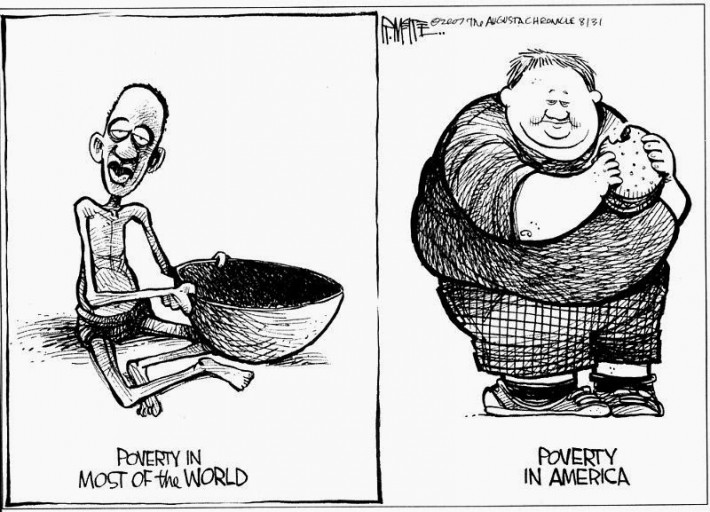
Think about making healthy choice when it comes to eating a meal and exercising: think about the time it takes to prepare the meal, the transportation necessary to get to the store, think about the money we need to afford it, the cost of a gym membership. When you have a higher income, you have a greater opportunity to make healthy life-style choices.
When it comes to growing up, Childhood poverty can have life long health consequences. According the Pediatrician, John P Schonkoff, at Harvard Medical Center "just the burden of day after day not knowing whether there is going to be food on the table or not knowing whether you're going to have a roof over your head, is actually toxic to the brain and the reason for that is because when the stress hormone levels go up, and if it stays up for days and weeks on end, those hormone levels literally interfere with the development of the brain circuity, they interfere with the development of the connections in the brain. So we begin to see in children who experience toxic stress, long term impacts of whats basically chemically damaging to their brain". This demonstrates how socio-economic levels have long term effects on the mental health and physicality of the human body. Unfortunately when it comes to children, they do not have much control over there circumstances. It appears that this is an ongoing problem across our nation in impoverished communities.
"Part of good public health, is empowering communities". - Dr. Adewale Troutman: Director of Louisville Public health and wellness. Other researchers mention creating a a just society as a whole, which goes back to our first class, where we talked about social issues and how they involve communities and large groups of people. It appears that problems effect large groups of people but we as a community can take steps on a united front to begin to address and solve them.
Check out Ted Talks: Mental health & Poverty and more information about obesity in the United States Waist Size and Socioeconomic Status.
Adelman, L. (Director). (2008). In Sickness and in Wealth [Video file]. California Newsreel. Retrieved May 21, 2018, from Kanopy.
Psychologist, Sheldon Cohen wanted to examine the way stress effects our immune system. He stated that "It turns out the more education you have, the less cortisol you release during the day. The more income you have, the less cortisol you release during the day". Cortisol is in fact good for your body in small doses. Long term effects can have detrimental effects. Research indicated that individuals with less chronic stress caught less colds then people with more chronic stress. Those individuals with successful careers have a co-workers to help facilitate job tasks, which cause for less stress as well. Individuals with less stress live healthier lifestyles. These are people are ones who typically have a higher education and have more financial security.
Think about making healthy choice when it comes to eating a meal and exercising: think about the time it takes to prepare the meal, the transportation necessary to get to the store, think about the money we need to afford it, the cost of a gym membership. When you have a higher income, you have a greater opportunity to make healthy life-style choices.
When it comes to growing up, Childhood poverty can have life long health consequences. According the Pediatrician, John P Schonkoff, at Harvard Medical Center "just the burden of day after day not knowing whether there is going to be food on the table or not knowing whether you're going to have a roof over your head, is actually toxic to the brain and the reason for that is because when the stress hormone levels go up, and if it stays up for days and weeks on end, those hormone levels literally interfere with the development of the brain circuity, they interfere with the development of the connections in the brain. So we begin to see in children who experience toxic stress, long term impacts of whats basically chemically damaging to their brain". This demonstrates how socio-economic levels have long term effects on the mental health and physicality of the human body. Unfortunately when it comes to children, they do not have much control over there circumstances. It appears that this is an ongoing problem across our nation in impoverished communities.
"Part of good public health, is empowering communities". - Dr. Adewale Troutman: Director of Louisville Public health and wellness. Other researchers mention creating a a just society as a whole, which goes back to our first class, where we talked about social issues and how they involve communities and large groups of people. It appears that problems effect large groups of people but we as a community can take steps on a united front to begin to address and solve them.
Check out Ted Talks: Mental health & Poverty and more information about obesity in the United States Waist Size and Socioeconomic Status.
Adelman, L. (Director). (2008). In Sickness and in Wealth [Video file]. California Newsreel. Retrieved May 21, 2018, from Kanopy.
Wednesday, May 16, 2018
Blogging 101
My name is Erin McGloin. I am originally from Long Island but I currently live in Newport, Rhode Island. I graduated with a degree in Elementary Education and Mild/Moderate Special Education from Salve Regina University. Afterwards, I moved back home and worked at a pre-school for the summer, realized how miserable I was and decided to move back to Rhode Island that September. With absolutely no money and student loans that could make anyone cry, I realized I needed to score a job sooner than later. I applied to a position in Newport to be a teacher in the Life Skills program - miraculously became hired at age 22 in a job where I had to work cohesively with paraprofessional twice my age, disgruntled parents, and students with significant needs. I really did not know what I was getting myself into. However, I FELL IN LOVE. It felt like I found my calling in life. I started attending classes at the Sherlock Center and met two professors who changed the way I think about inclusion, Dr. Tony Antosh and Dr. Sue Dell - two amazing, intelligent people who opened my mind and gave me the confidence to improve the lives students with severe to profound intellectual and developmental disabilities. Now, I am finishing my third year of teaching at Thompson Middle School. After this semester, I have one class left to take in the Fall and I will graduate with my Masters in Severe Intellectual Disabilities in December. I also coach the girls volleyball team at Rogers High School in Newport and the girls basketball team at Thompson. I played volleyball in college and continue to play in adult leagues and beach tournaments. In my free time I love going to the beach, listening to music, drinking and going out to eat with friends.
Subscribe to:
Comments (Atom)